Behind the Red Door: How Editors Read Your First 300 Words
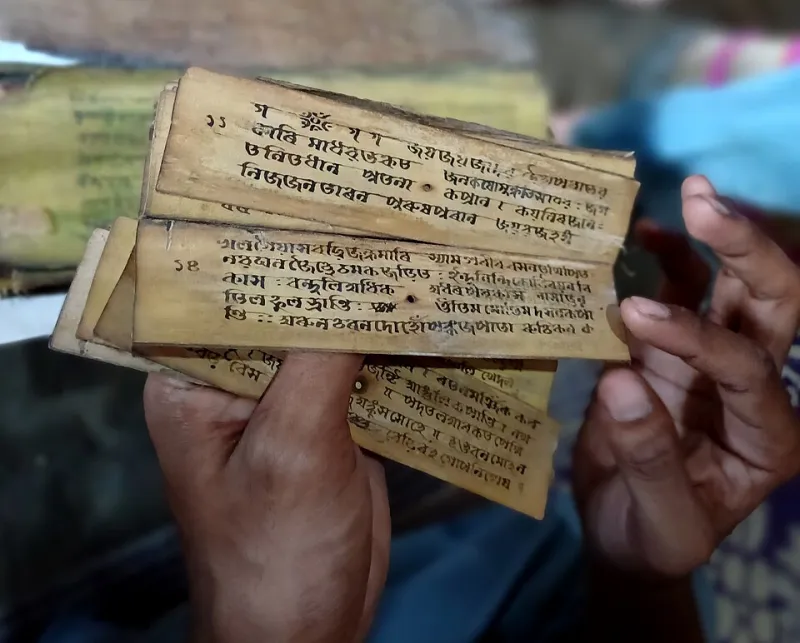
Photo: Nayan j Nath, CC BY-SA 4.0, via Wikimedia Commons
At an independent press, the manuscript pile never really shrinks. We open submissions the way a reader opens a book at a bookstore: with curiosity, yes, but also with limited time. The first 300 words aren't everything — but they're the reason we read word 301.
So what actually happens in those first few minutes with a new manuscript? Let's pull back the curtain.
The Three-Question Window
Most acquisitions readers make three quick judgments before finishing page one:
1. Whose story is this? Not the plot — the voice. Within a paragraph, we want a sense that someone specific is telling us something. A recent submission opened with weather over a Midwestern town. Fine, except the second paragraph introduced four named characters, a funeral, and a secret. We didn't know who to follow, so we stopped following.
2. Why now? Openings that start at the moment something shifts have momentum. One manuscript that landed on our accept pile began: "The day my brother got out of prison, he bought a parakeet." Strange, specific, and instantly a story in motion. No setup required.
3. Can this writer control a sentence? We're not looking for purple prose or flashy verbs. We're listening for rhythm — sentences that vary, that know when to stop. Control on page one signals control on page 250.
The Openers That Closed the Door
Anonymized, but painfully common:
- The dream sequence. If the protagonist wakes up in paragraph two, we've been teased with stakes that don't exist. It reads as a stall.
- The alarm clock. A character waking, showering, and thinking about their life is a summary, not a scene. Start where the routine breaks.
- The prologue from another century. Sometimes it works. Usually it signals the author didn't trust chapter one to do its job.
- The throat-clearing. Two paragraphs of beautiful scenery before a single human appears. Landscape matters — but people matter more.
None of these are fatal sins. But at a small press, where every acquisition is a bet, we're looking for writers who respect the reader's time from sentence one.
What Opened the Door
The openings that stuck with us shared a few traits:
- A concrete detail doing double duty. One memoir began with the narrator cataloging the contents of a foreclosed house. Every object told us about the family without a word of exposition.
- A question we wanted answered. Not a literal mystery — an emotional one. Why is she burning the letters? Why is he smiling at the funeral?
- Confidence. Openings that trust the reader. No over-explaining, no hedging, no announcing the theme.
Your Pre-Submission Checklist
Before you hit send, run your first 300 words through this:
- Read it aloud. Anywhere you stumble, a reader will too.
- Cut the first paragraph. Seriously — try it. Many manuscripts genuinely start in paragraph two.
- Check the entrance. Does your protagonist enter the story doing something, not just thinking something?
- Name check. Count how many names appear. If it's more than three in 300 words, readers lose track.
- The genre promise. A thriller should hum with tension; literary fiction should sing with language. Make sure the opening matches the book you're actually submitting.
- End on a hook, not a summary. The last sentence of page one should pull, not wrap.
- Fresh eyes. Hand it to one honest reader and ask, "Would you turn the page?" Then believe their answer.
One Last Thing
A strong opening won't save a weak manuscript, and a slow start won't sink a great one — we do read past page one, especially when a query letter shows intentionality. But your first 300 words are a handshake. Make it warm, make it firm, and make us want to keep talking.
The door is open. Walk through it like you belong there — because if the writing is ready, you do.