The Short Shelf Doctrine: Why Indie Presses Should Publish Fewer, Braver Books

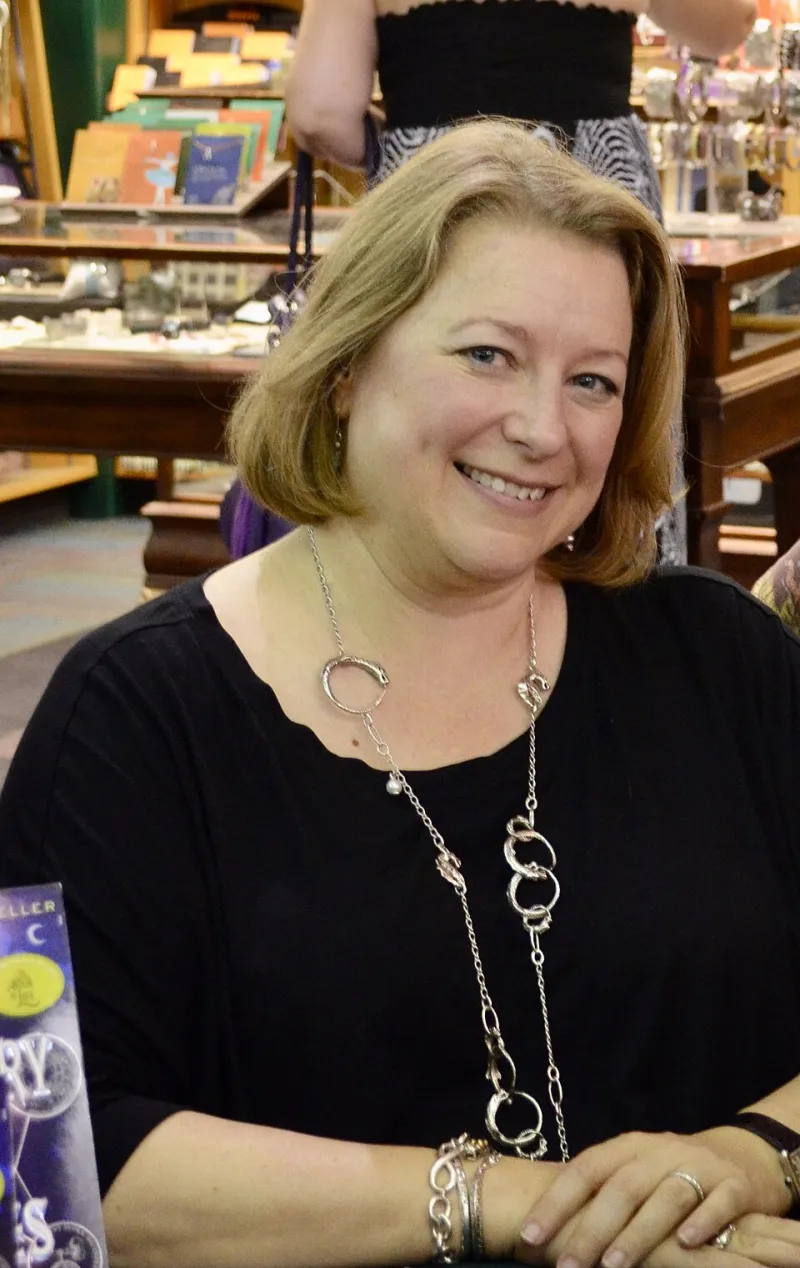
Photo: brewbooks from near Seattle, USA, CC BY-SA 2.0, via Wikimedia Commons
A door is a promise. A revolving door is a habit. In independent publishing, the difference matters more than ever.
Open submissions are one of the best things about small presses. They let a writer in Des Moines or a translator in Tucson send work to an editor without an agent, a connection, or a lucky break at a conference bar. That access is worth protecting. But access is not the same as acceptance, and an open door should not become a turnstile. The healthiest indie catalogs are not the ones with the most titles. They are the ones where every title has a reason to be there.
Open Door, Selective Shelf
At Red Door Publishing, the phrase every great story deserves an open door is not a promise to publish everything that knocks. It is a promise to listen. There is a real difference between a press that reads widely and a press that publishes widely. The first is a literary citizen. The second is often a volume business wearing a friendly cardigan.
A smaller, braver catalog starts with a simple editorial question: can we stand behind this book six months after launch, when the reviews have slowed and the inbox has moved on? If the answer is maybe, the book probably needs more work or a different home. If the answer is yes, then the press owes that book real attention: a sharp edit, a thoughtful cover, a launch plan, and a second push when the first one fades.
This is not nostalgia for some imagined golden age of publishing. It is a practical response to how readers actually find books in 2026. There is more noise than ever. A short catalog cuts through it because it functions as a reading list rather than a warehouse inventory.
The Volume Problem Wears a Friendly Face
A press with a volume problem rarely announces itself. It talks about how many titles it releases per season. It celebrates submission numbers. It has a submissions page full of enthusiasm and a catalog full of books that feel like they were edited by a committee in a hurry.
Authors can learn to spot the difference. Ask who will edit your manuscript and how many other books that editor is handling at the same time. Ask what happens after launch week. Ask for the last three catalogs and read two books from each. Do the books feel chosen? Do they share a sensibility without repeating themselves? Does the press say no to good manuscripts because they are not right for the list? A press that cannot say no is not curating. It is accumulating.
None of this is an argument against ambition. A small press can be ambitious about reach, design, rights, and reader relationships. But ambition should show up as conviction, not quantity. The most memorable indie catalogs are not the biggest ones. They are the ones where you can feel an editor's hand on the wheel.
What a Braver Catalog Looks Like
A braver catalog is often a shorter one. It might be eight books a year instead of thirty. It might be a single nonfiction title about a local river alongside two story collections and a translated novel that no one else would touch. The through line is not genre or marketing category. It is editorial nerve.
That nerve has practical consequences. A press with fewer books can send every title to independent bookstores with a real pitch instead of a catalog dump. It can buy a second printing before the first review cycle ends. It can afford to keep a book alive for two years, which is often how long it takes a quiet title to find its people through library holds, Bookshop.org links, and one bookseller in Minneapolis who will not stop hand-selling it.
For readers, a short catalog is a gift. It says: someone read all of this and chose it for you. In a season when every platform is trying to serve you more, a press that serves you less, but better, feels almost revolutionary. That is the kind of shelf browsing worth protecting in 2026: not endless scroll, but a table of books with a point of view.
A Checklist for Authors and Readers
For writers, the questions are simple. Does this press have a vision I can describe in one sentence? Do its books look like they belong together without looking identical? Does the contract make sense, and does the editorial letter make me nervous in a good way? A press with a volume problem will often answer with numbers. A press with a vision will answer with books.
For readers, the test is just as easy. Pick up three titles from a small press. If they feel like they were published by the same person for the same reason, you have found something. If they feel like they were uploaded by the same software, keep browsing.
An open door is not a revolving door. The best indie presses know that the door is for submissions, for conversation, for the next great manuscript that has not found its home yet. The shelf is for conviction. Keep the door open. Keep the shelf short. That is how a catalog earns trust, one braver book at a time.